Over the years, I've led teams through ambiguity, restructures and moments where the path forward wasn't obvious. I've built contingency plans, governance models and operating rhythms designed to hold up under pressure.
I never expected the most complex leadership challenge of my life to come not from a boardroom—but from walking alongside my parents as my father's dementia progressed.
What surprised me most wasn't the emotional weight.
It was how familiar the problems felt. The context was deeply personal. The lessons were unmistakably professional.
Context That Matters
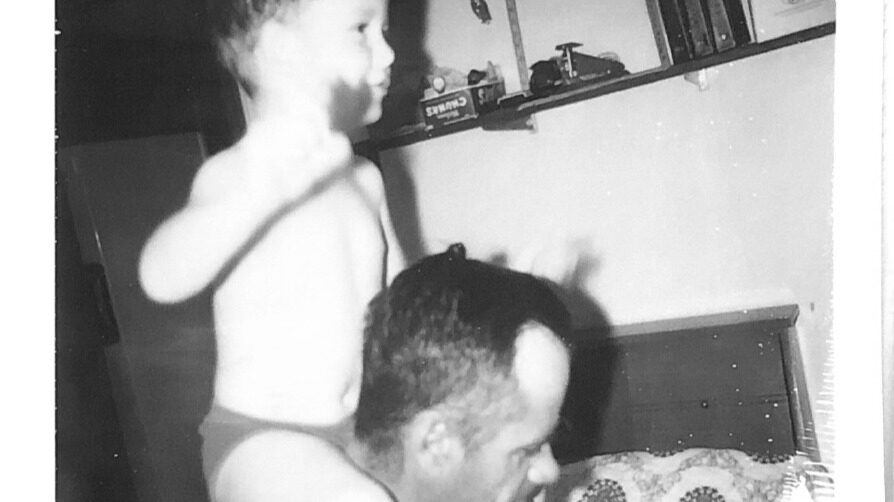
My dad was not a business guy. He was a farmer and a truck driver. He worked relentlessly, saved carefully, was deeply religious and quietly proud of his family. He avoided tough conversations but always wanted his kids to do better than he did.
As the youngest of five—and the only boy—I know he carried pride as he watched me build my career. He encouraged me constantly, even when he didn't fully understand what I did.
Watching the person my mother built a life with slowly slip away is its own kind of grief. One that unfolds day by day.
This is not just a story about dementia. It's a story about leadership under emotional load.
Here is what that experience taught me about leading through uncertainty.
1. Preparation Is an Act of Love
In business, we plan for contingencies not because we expect failure—but because we respect reality.
Dementia is progressive, not sudden. That gave us a choice: react later, or prepare early. We approached this with the same rigor I would bring to any complex transition—clear roles, structure and decisions made before urgency removed the ability to make them well.
That meant power of attorney, financial and legal structure and living arrangements. All discussed while we still could.
Preparation didn't make this easier emotionally. It made it manageable operationally.
Hope is not a strategy—at work or at home.
2. Structuring the Transfer of Authority
Trust exists naturally in families. Trust during a loss of independence is different.
For my dad, giving up control—even incrementally—was uncomfortable. For me, taking it on was terrifying.
What we learned quickly is that compassion without clarity creates chaos. We needed a governance model for the transfer of authority—what decisions he could still make safely, and where my role shifted from son to operator.
You cannot hope a transition of power goes well. You have to design the structure that allows trust to survive the shift.
3. Leading With Someone You Love
One of the hardest lessons wasn't managing my dad's decline. It was supporting my mom through it.
She wasn't just losing a spouse. She was losing a rhythm, a shared history and a daily anchor.
There were difficult conversations about what was coming—and when support was no longer optional.
Leadership isn't about having the answers. It's about staying present long enough to create clarity. Especially when the conversation is hard.
4. The Discipline of Imperfect Decisions
Watching someone you love cognitively decline is emotionally brutal. But there are moments when emotion cannot sit in the driver's seat.
Emotion informs the why. Discipline determines the next step.
I adopted a simple discipline: decide, then absolve.
- Decide. Make the best decision possible with the information available.
- Absolve. Accept the trade-off immediately. Do not waste energy auditing a decision that never had a perfect outcome.
Some decisions require empathy. Some require decisiveness. The hardest require both. But not at the same time.
This isn't detachment. It's leadership under pressure.
5. Leaders Don't Think Clearly in Isolation
In business, executives rely on sounding boards—people who help frame the problem, challenge assumptions and slow thinking down just enough to see the trade-offs more clearly.
This situation was no different.
Throughout this journey, my partner was that sounding board. Not someone making decisions for me—but someone who could listen without reacting, question my framing when it drifted and help separate urgency from importance.
Most decisions weren't binary. They were trade-offs with no perfect answers. Having a trusted perspective didn't remove that complexity. It helped me navigate it with clarity.
Leadership isn't about carrying everything yourself. It's about knowing when perspective is required to think well.
Without a support network, leaders don't become stronger. They become less aware of the blind spots they're carrying.
6. Systems Beat Heroics
In startups, founders burn out when everything depends on them.
Caregiving is no different.
Love does not scale without systems. What worked for us were routines, checklists, documentation and external support—so that if I stepped away, the operation didn't collapse.
Leadership isn't measured by how much you carry. It's measured by what still works when you aren't in the room.
7. Matching the Metric to the Moment
One of the quiet traps was measuring success by the wrong standards.
My dad fought to maintain his independence and productivity. That made complete sense.
But the environment had changed. If we kept using the old scorecard, we would fail every day.
Success stopped being about productivity or sharpness. It became about safety, comfort, predictability and emotional stability.
True leadership isn't just hitting targets. It's knowing when to change the targets before the environment forces the issue.
8. Reframing Repetition
One of the most tangible realities of dementia is repetition. Conversations narrow. Stories resurface. The same questions return—sometimes minutes apart.
At first, this was frustrating. It felt like nothing was moving forward.
Over time, I reframed it.
Repetition isn't inefficiency. It's reassurance. Each repeated question is less about information and more about orientation—about trying to feel grounded right now.
I once heard a performer describe doing the same show hundreds of times. Their view was simple:
I may have done this countless times, but the person in the audience is seeing it for the first time. I owe them my full presence every time.
Dementia demands the same discipline.
In many environments, repetition eventually leads to alignment and momentum. Here, the path is different. The conversation doesn't advance—it resets. Conversations grow simpler. The work becomes holding steady, not moving on.
Tone matters more than novelty. Calm matters more than efficiency.
Reframing repetition doesn't remove frustration. But it gives it purpose.
9. Preserving Dignity
My dad is not "a patient."
He's a man who worked hard, loved his family, saved what he could, believed deeply and wanted his kids to do better than he did.
Leadership transitions shouldn't erase identity. They should protect it.
Respect doesn't require illusion. It requires intention.
Closing Thought
Dementia strips away capabilities—but not dignity.
Leadership, at its core, is about creating stability in uncertainty. For others, not yourself.
None of this was done alone. And it couldn't have been.
But like the best mentors, my father is still teaching me. Just in a different way.
And my mother—through resilience, honesty and quiet strength—continues to show me what leadership looks like when no one is watching.